Rāpaki Marae was the setting for the inaugural Whaka-Ora Healthy Harbour programme noho marae recently.
Executives from Lyttelton Port Company (LPC), Ngāi Tahu, Christchurch City Council (CCC) and Environment Canterbury attended the two-day visit to strengthen the organisations’ commitment to working collaboratively on the programme’s delivery.
The kaupapa/purpose of the plan is to restore the ecological and cultural health of Whakaraupō/Lyttelton Harbour as mahinga kai.
After a pōwhiri from the mana whenua, Ngāti Wheke, it was time for kai and mihimihi (greetings).
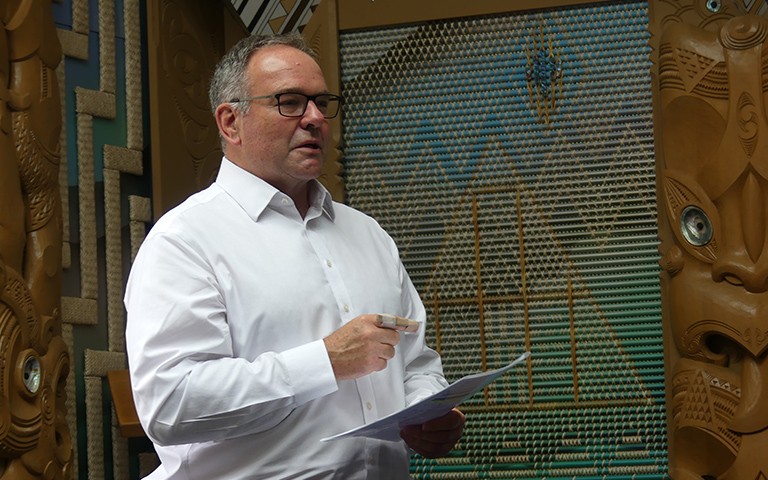
Newly-appointed LPC chief executive officer Roger Gray, along with our chief executive Bill Bayfield (pictured above) and CCC chief executive Dawn Baxendale spoke about their organisation’s ongoing commitment to Whakaraupō/Lyttelton Harbour and the Healthy Harbour programme.
Many discussions and proposals were tabled over the course of the stay, with a few common themes emerging.
Some of the key themes discussed were around removing barriers so that practical actions could take place; the use of regulatory instruments in decision making; behaviour changes being a key for all groups involved – including community; and how those communities could build capacity and capability.
Vital to the success of the programme
Our zone delivery lead for Banks Peninsula, Gillian Jenkins, said the noho marae experience was vital to the success of the programme.
“Bringing together the partners of the plan on the marae helps us to all break down some of the invisible barriers that can exist when we are all in our own offices,” she said.
“We openly get to share some of the successes and opportunities the plan brings and ensure we are all working together to make it come to life.”
Gillian added: “It’s a great opportunity to see and hear what the plan means to the rūnanga and working with the view of the harbour right outside really keeps the goals in perspective.”
Aligning and ongoing monitoring of data was also discussed. It was decided that data is key to telling the whole story of the Whaka-Ora journey.
The next step for the programme is for proposed actions and goals to be presented to the Governance Group this month, for consideration on how best to achieve them.
The noho marae aligns with the Plan’s kaupapa of mahinga kai as the group was able to spend invaluable time in the environment they are tasked with protecting, along with discussing and carrying out actions towards the kaupapa.